
Plywood vs MDF Workbench Top: Which is Best for Your Shop?
Compare plywood and MDF for your workbench top. Discover the pros, cons, durability, and cost of each material to build the perfect woodworking shop table.
Compare plywood and MDF for your workbench top. Discover the pros, cons, durability, and cost of each material to build the perfect woodworking shop table.
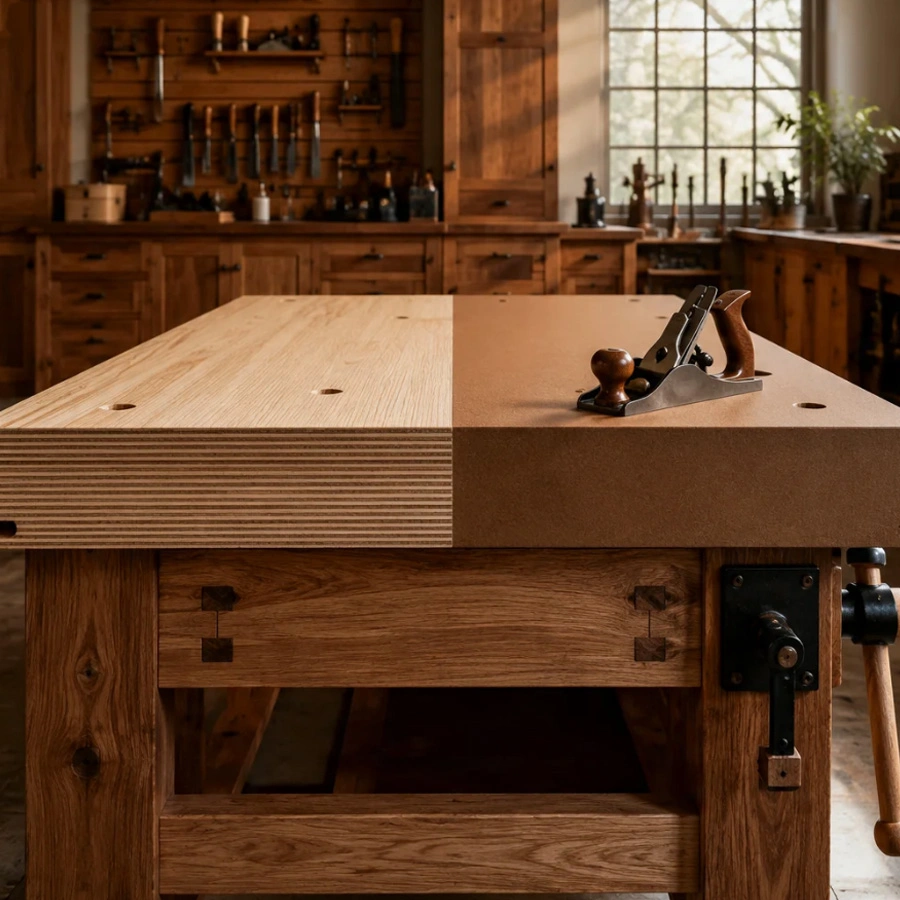
Plywood vs MDF for workbench top: which material should you choose? Choosing the right surface for your woodworking table is critical because it takes a massive beating from heavy tools, sharp blades, and constant clamping. The short answer: Hardwood plywood is superior for overall durability and screw holding power, while MDF is the best choice if you need a perfectly flat and inexpensive surface. Hardwood plywood handles moisture better and will not strip when you mount vises to it. MDF, on the other hand, is heavier and provides a dead flat assembly surface, but it acts like a sponge if you spill glue or water on it. In this comprehensive comparison, we will explore the strengths and weaknesses of both materials to help you build your dream workshop table.
Here is a direct comparison of the key factors that matter most when selecting the surface for your shop workbench:
| Feature | Hardwood Plywood | MDF |
|---|---|---|
| Surface Flatness | Good | ✓ Excellent (Dead Flat) |
| Screw Holding Power | ✓ Excellent | Poor (Strips easily) |
| Moisture Resistance | ✓ Good | Poor (Swells quickly) |
| Weight and Stability | Moderate | ✓ Very Heavy (Less vibration) |
| Cost per Sheet | More Expensive | ✓ Highly Affordable |
| Edge Durability | ✓ Strong (Can be banded) | Weak (Dents easily) |
Plywood is made from thin layers of wood veneer glued together in alternating grain directions. This cross laminated construction gives plywood incredible strength and makes it highly resistant to warping or sagging under heavy loads. For a workbench top, you should strictly use cabinet grade hardwood plywood, such as birch plywood, rather than cheap construction grade pine.
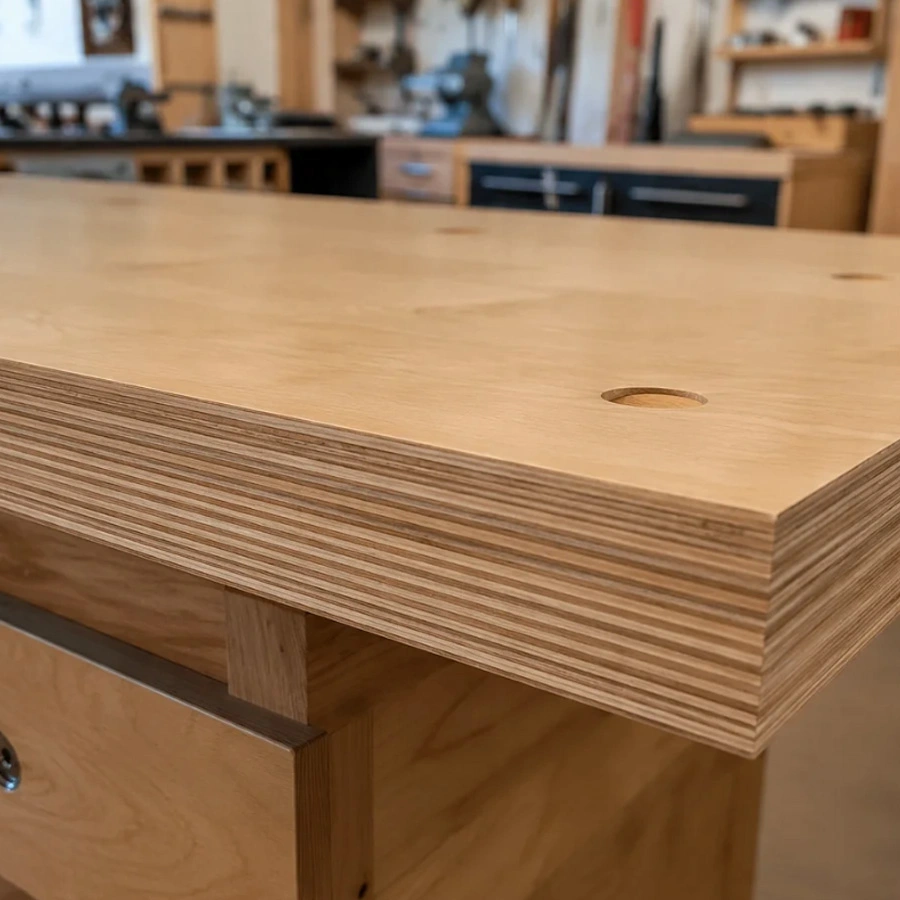
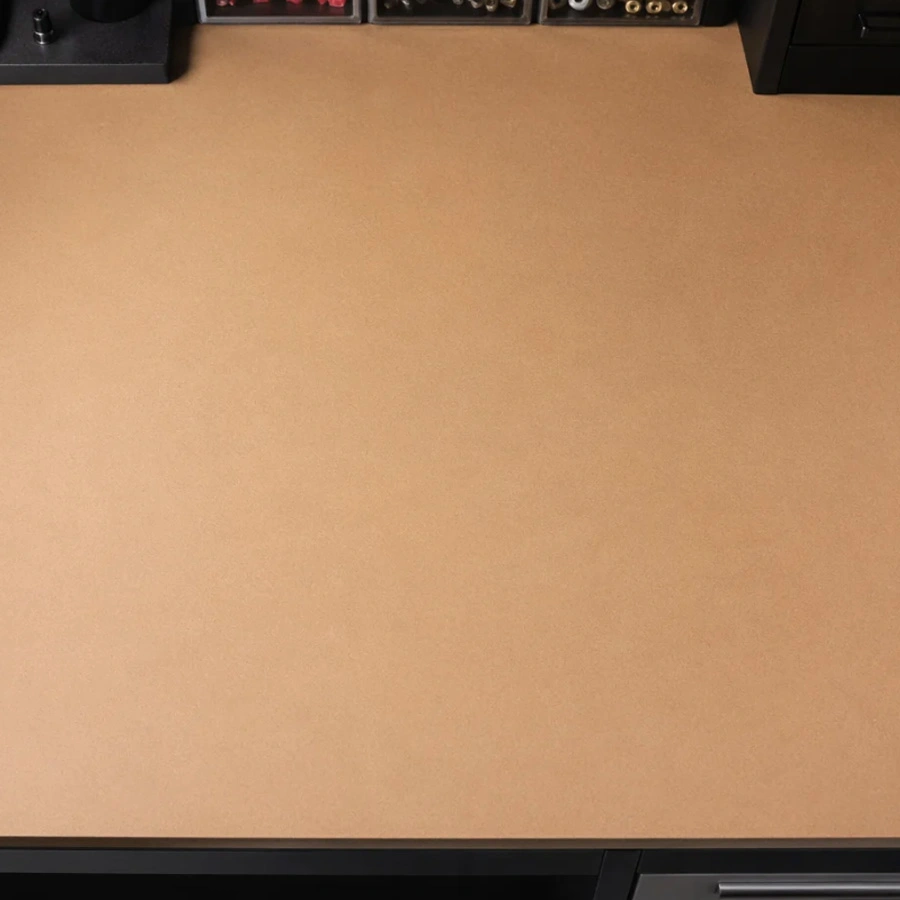
MDF (Medium Density Fiberboard) is an engineered wood product made by breaking down hardwood or softwood residuals into wood fibers, combining it with wax and a resin binder, and forming it into panels by applying high temperature and pressure. The result is a heavy, dense, and perfectly uniform sheet with no knots or voids.
The best choice depends entirely on how you plan to use your shop. If you perform heavy hand tool woodworking, use a lot of holdfasts, and need to mount heavy vises, hardwood plywood is your best option due to its structural strength.
However, if you primarily use power tools, need a perfectly flat reference surface for assembling cabinets, and want to keep costs down, MDF is the winner. Many professional woodworkers use a hybrid approach: they build a thick MDF core for mass and flatness, and top it with a replaceable layer of tempered hardboard.
Once your workbench is fully built and ready for action, do not forget to organize the tools hanging above it. Check out our comprehensive French cleat vs pegboard guide to complete your ultimate shop setup.
Plywood is better for overall durability and screw holding power, making it ideal for heavy duty tasks. MDF is better if you need a perfectly flat and inexpensive surface, though it requires protection from moisture.
A plywood workbench top should be at least one and a half inches thick. You can achieve this by gluing two sheets of three quarter inch hardwood plywood together.
Yes, MDF makes an excellent workbench top because it is perfectly flat and heavy. However, it dents easily and absorbs water, so it must be sealed properly or covered with a replaceable hardboard layer.
Plywood holds screws much better than MDF. The cross laminated veneer layers in plywood grip screw threads tightly, whereas MDF is essentially compressed dust and can easily strip out.
Yes, you absolutely must seal an MDF workbench top. Polyurethane, wipe on poly, or even a simple coat of paste wax will prevent the MDF from acting like a sponge and expanding when exposed to spills.
Choose the best material for your workbench, then explore our full 23+ Woodworking Plans PDF bundle for your next project.
Get The Complete Bundle ↗
Master Woodworking Educator · Since 2004 · 2,800+ Students Taught
Mahasa is a Master Woodworking Educator with over 20 years of hands on experience in furniture making. He has helped thousands of students from complete beginners to aspiring professionals build beautiful, functional pieces with confidence. His 23+ Essential Woodworking Plans PDF collection is trusted by students in over 50 countries. Learn more about Mahasa →
