
French Cleat vs Pegboard – Which is Better for Your Workshop?
Complete comparison of French cleat and pegboard wall storage systems. Pros, cons, costs, and which system fits your woodworking shop best.
Complete comparison of French cleat and pegboard wall storage systems. Pros, cons, costs, and which system fits your woodworking shop best.
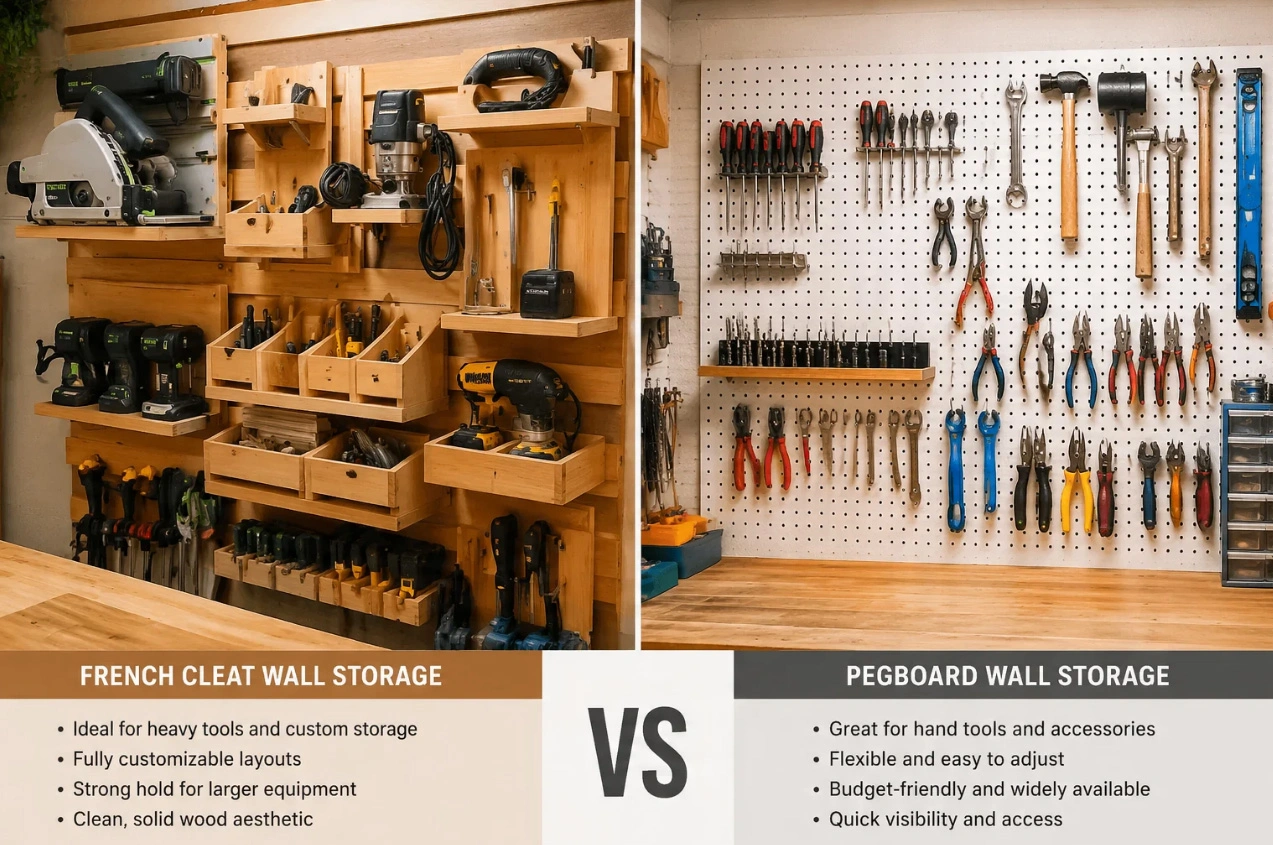
French cleat vs pegboard — which is the better choice for your workshop? If you need to organize your woodworking space, this is one of the most important decisions you'll make. The short answer: French cleat is superior for heavy tools and custom flexibility, while pegboard is better for light tools and tight budgets. A French cleat system uses angled interlocking wood strips that can hold hundreds of pounds, making it ideal for table saws, drill presses, and clamp racks. Pegboard, on the other hand, uses perforated hardboard with wire hooks — it's cheap, fast to install, and works fine for hammers, wrenches, and small hand tools. In this comprehensive French cleat vs pegboard guide, we'll break down the costs, installation difficulty, weight capacity, customization options, and long-term value of each system.
Here's a direct comparison of the key factors that matter most when choosing a workshop wall storage system:
| Feature | French Cleat | Pegboard |
|---|---|---|
| Weight Capacity | ✓ 200+ lbs (per cleat) | 25-50 lbs (per sq ft) |
| Installation Difficulty | Moderate (requires precise cutting) | ✓ Easy (screw to wall) |
| Cost (8x4 ft wall) | $100-$300 | ✓ $30-$80 |
| Customization | ✓ Build your own holders | Limited to available hooks |
| Flexibility | ✓ Move tools anywhere | ✓ Move hooks easily |
| Best For | ✓ Heavy tools, clamps, power tools | ✓ Light hand tools, small shops |
| Looks | ✓ Rustic, professional, customizable finish | Industrial, utilitarian |
| DIY Friendly | Requires woodworking skills | ✓ Beginner-friendly |
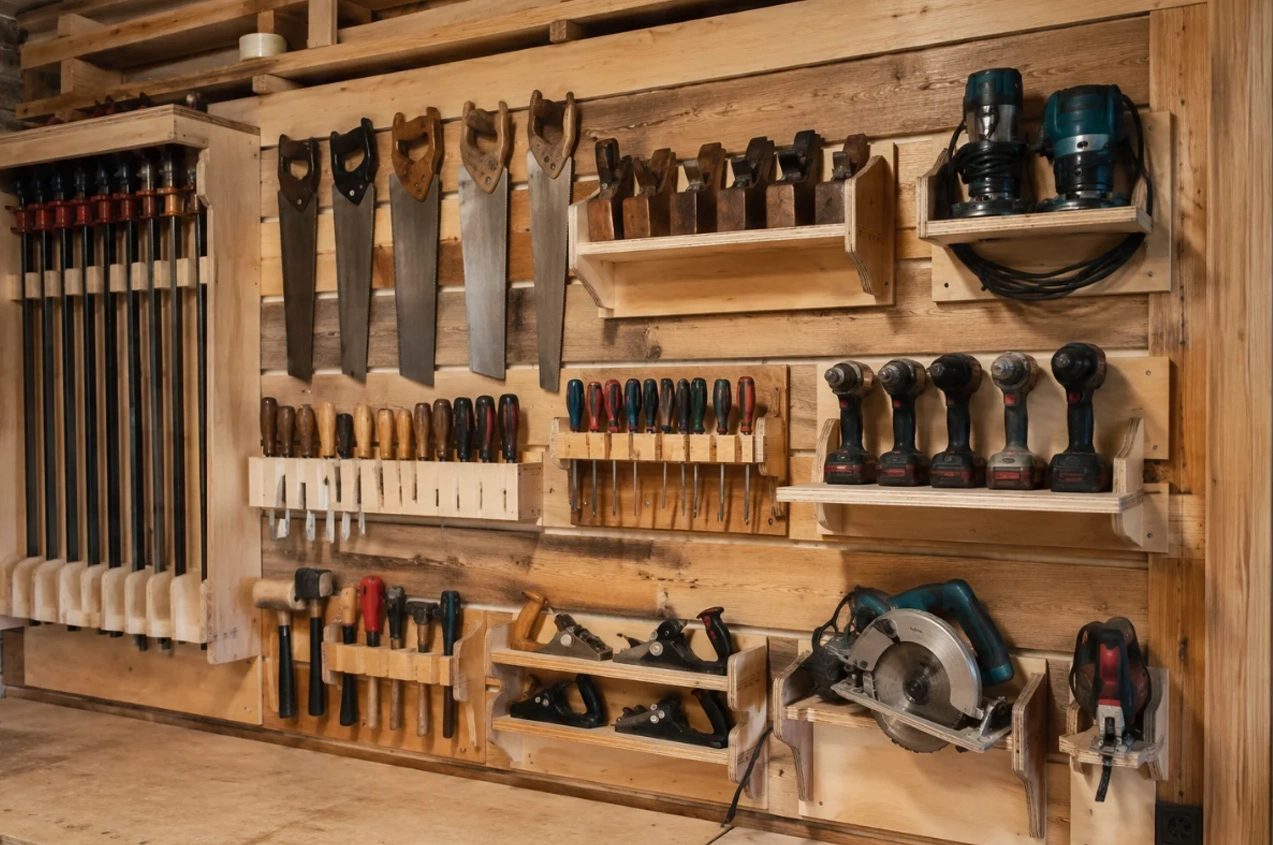
A French cleat is a simple yet brilliant wall hanging system. It consists of two interlocking strips of wood, each cut at a 45-degree angle. One strip is attached to the wall, and the other is attached to your tool holder or shelf. When you hang the tool, the two angled surfaces lock together, creating a secure, weight-bearing connection that gets tighter as the weight increases.
The beauty of a French cleat system is its modularity. You can build custom tool holders, clamp racks, shelves, and even cabinets that all mount to the same wall cleat. Want to rearrange your workshop? Just lift off a tool holder and move it to a different cleat. Need to add a new tool? Build a new holder and slide it onto the wall. This flexibility makes the French cleat a favorite among serious woodworkers who frequently reconfigure their workspace.
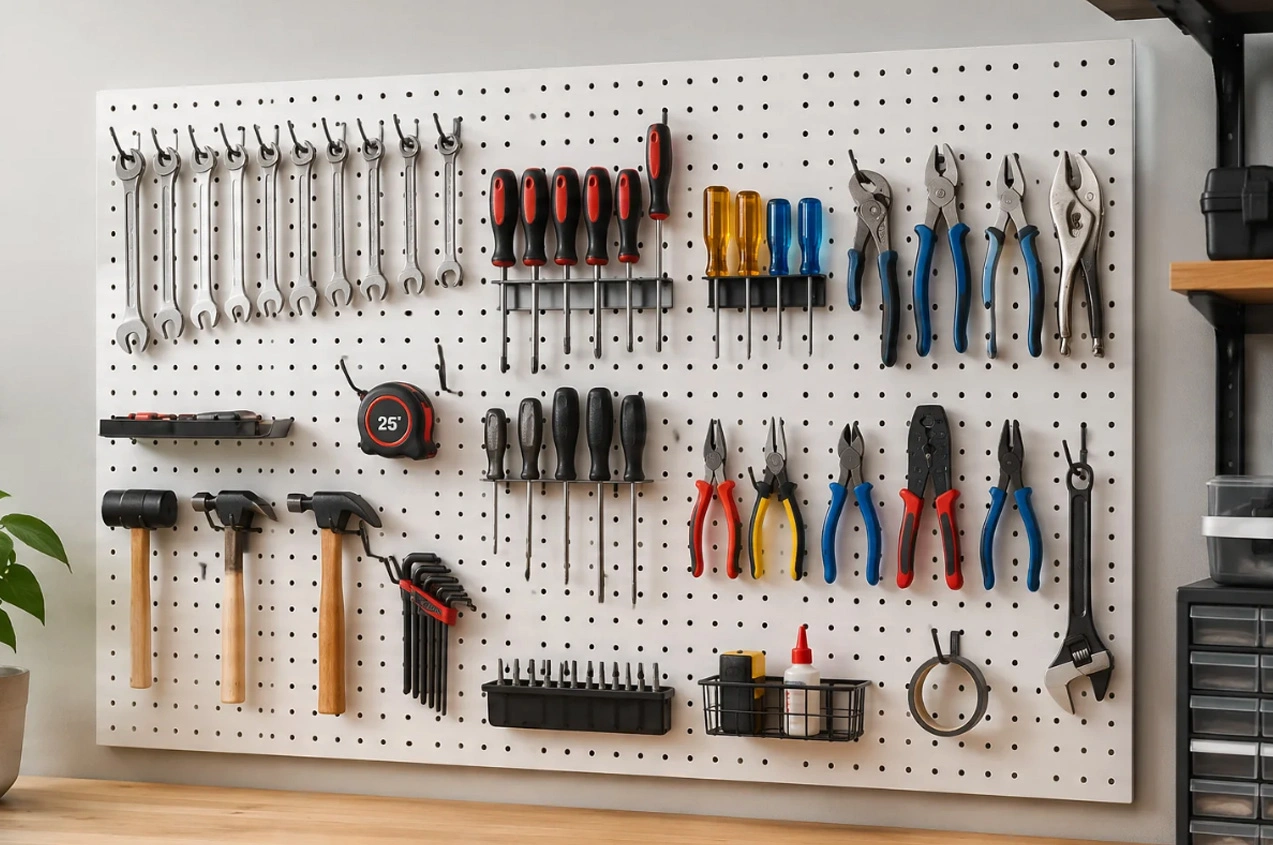
Pegboard is a perforated hardboard or metal sheet with a grid of holes spaced 1 inch apart. It's designed to accept specialized hooks, pegs, and brackets that hold tools. Pegboard has been the go-to workshop storage solution for decades because it's affordable, lightweight, and dead simple to install.
Available in various sizes and materials (hardboard, tempered, metal, and plastic), pegboard is available at any hardware store. It's the quickest way to get your tools off the workbench and organized on the wall. However, the weight limitations and hook sizes make it less suitable for heavy tools or large workshops.
Many experienced woodworkers use both systems in their shops. Install a French cleat on one wall for heavy tools, large clamp racks, and custom cabinets. Install pegboard above your workbench for quick access to frequently used hand tools. This hybrid approach gives you the best of both worlds: strength and customization where you need it, and convenience where you want it.
A French cleat is a modular wall hanging system using angled interlocking wood strips, while pegboard is a perforated hardboard that uses hooks and pegs for hanging tools. French cleat is stronger, more flexible, and custom-built, while pegboard is cheaper, lighter, and ready-made.
French cleat is significantly stronger. A properly installed French cleat can hold hundreds of pounds, while pegboard has limited weight capacity (typically 25-50 lbs per square foot).
Yes, initially. French cleat requires more wood and custom fabrication, while pegboard is inexpensive and ready-to-install. However, French cleat offers better long-term value and customization.
Absolutely. French cleat is the preferred choice for heavy tools like table saws, drill presses, and large clamps. The angled interlocking design distributes weight evenly across the wall.
Yes, pegboard remains a solid choice for small to medium workshops with lightweight tools. It's affordable, easy to install, and widely available in hardware stores.
Choose the best storage system for your workshop, then explore our full 23+ Woodworking Plans PDF bundle for your next project.
Get The Complete Bundle ↗
Master Woodworking Educator · Since 2004 · 2,800+ Students Taught
Mahasa is a Master Woodworking Educator with over 20 years of hands-on experience in furniture making. He has helped thousands of students — from complete beginners to aspiring professionals — build beautiful, functional pieces with confidence. His 23+ Essential Woodworking Plans PDF collection is trusted by students in over 50 countries. Learn more about Mahasa →
